
Choosing the right personal item bag for flying can make air travel much easier, especially when you want to avoid checking luggage or paying for an additional carry-on. A personal item is generally a smaller bag that fits beneath the seat in front of you, but the permitted dimensions, weight restrictions, and included baggage allowance can vary significantly between airlines and ticket types. Understanding these differences before your trip can help you choose the right bag and avoid problems at the airport.
A well-planned personal item can hold important travel essentials such as identification, electronics, medication, documents, snacks, and other items you want to keep close throughout your journey.
What Is a Personal Item on a Flight?
A personal item is typically a small piece of baggage designed to fit underneath the seat in front of you.
Common examples include:
- Small backpack
- Laptop bag
- Handbag
- Purse
- Small tote
- Briefcase
- Compact travel bag
- Camera bag
- Small diaper bag
The main difference between a personal item and a standard carry-on is where the bag is stored.
A traditional carry-on generally goes in the overhead compartment, while a personal item is usually intended to fit underneath the seat.
However, airlines define their own baggage policies, so travelers should always check the specific rules for their airline and ticket.
Personal Item vs Carry-On Bag
Understanding the difference can help you pack more efficiently.
| Feature | Personal Item | Carry-On Bag |
|---|---|---|
| Typical storage | Under the seat | Overhead bin |
| Typical size | Smaller | Larger |
| Common examples | Backpack, purse, laptop bag | Small suitcase, travel bag |
| Accessibility | Usually easy to reach | May require opening overhead bin |
| Airline allowance | Depends on fare | Depends on airline and fare |
| Best for | Essentials and valuables | Clothing and larger belongings |
A personal item can be particularly useful when traveling light.
If your airline includes one personal item with your ticket but charges separately for a larger carry-on, using the available under-seat space efficiently can help reduce travel costs.
How Big Should a Personal Item Be?
There is no single universal personal-item size that applies to every airline.
Different carriers establish their own dimensions, and some may have weight restrictions as well.
For that reason, buying a bag solely because it is advertised as a “personal item” can be risky.
Instead, check:
- Maximum dimensions
- Weight restrictions
- Whether wheels and handles count
- Whether the bag must fit completely under the seat
- Whether the ticket includes a personal item
- Whether the airline has special rules for basic or budget fares
Why Dimensions Matter
A bag can look small enough but still exceed an airline’s published measurements because of:
- Wheels
- External pockets
- Handles
- Expandable sections
- Thick padding
- Rigid frames
A soft-sided bag can sometimes be easier to fit into a limited space because it has some flexibility.
What Should You Pack in Your Personal Item?
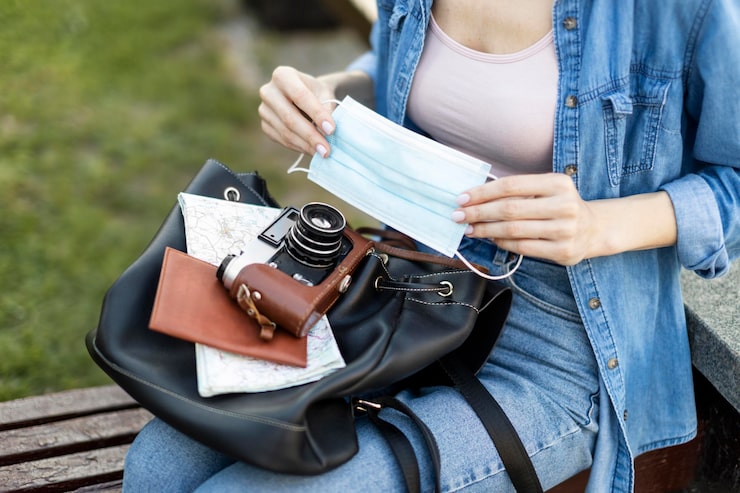
The best personal item contains things you may need during the journey rather than items that can remain in checked luggage.
Useful items include:
- Passport or identification
- Wallet
- Phone
- Laptop or tablet
- Charging cables
- Headphones
- Medication
- Travel documents
- Small snacks
- Empty water bottle
- Hand sanitizer
- Tissues
- Eye mask
- Reading material
- Essential valuables
The goal is not to fill every available space.
Instead, think about what you would need if your checked suitcase were delayed.
Essential Items to Keep With You
Some belongings are better kept in the cabin rather than checked luggage.
These can include:
Travel Documents
Keep your passport, identification, boarding information, visa documents, and other important paperwork easily accessible.
Medication
Essential medication should generally remain with you rather than being packed in checked baggage.
Electronics
Phones, tablets, laptops, cameras, and other valuable electronics are usually better protected when kept with you.
Valuables
Jewelry, cash, important cards, and other valuable belongings should not be casually placed in checked luggage.
Choosing the Right Bag Style
Different bag designs work for different travelers.
Backpack
A backpack is one of the most practical choices because it keeps both hands free.
Advantages include:
- Comfortable carrying
- Multiple compartments
- Laptop protection
- Easy organization
- Suitable for walking through airports
A compact backpack can work particularly well for business travelers and students.
Tote Bag
A tote provides easy access and can be useful for short flights.
It works well for:
- Books
- Snacks
- Tablets
- Clothing layers
- Small electronics
However, an unstructured tote can become difficult to organize if it is packed too heavily.
Laptop Bag
A laptop bag is ideal for travelers who need their computer during a trip.
Look for:
- Padded laptop compartment
- Secure zipper
- Charger storage
- Document pocket
- Comfortable shoulder strap
Small Duffel
A compact duffel can provide more packing capacity than a traditional laptop bag.
Choose one that remains within the airline’s under-seat dimensions when fully packed.
How to Pack a Personal Item Efficiently
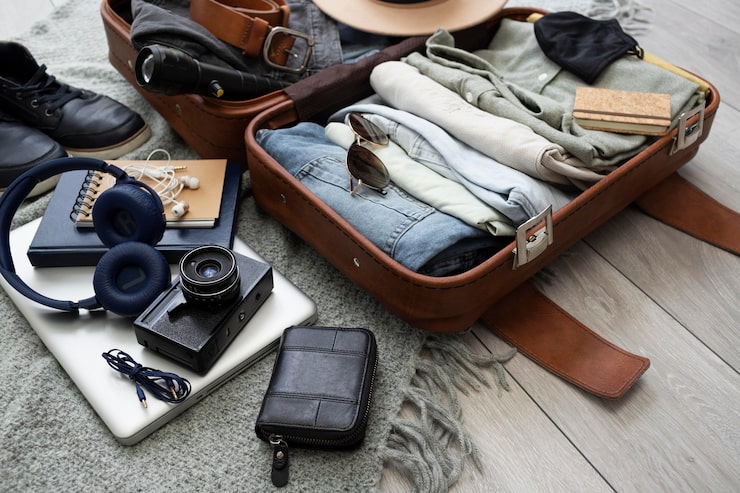
Good organization is more important than simply choosing the largest possible bag.
Use Small Pouches
Group small items into pouches.
For example:
- Electronics pouch
- Toiletry pouch
- Travel-document pouch
- Medication pouch
This makes it easier to find items without emptying the entire bag.
Keep Important Items Accessible
Place your passport, phone, wallet, and boarding information in an easy-to-reach compartment.
Put Electronics Near the Top
If airport security requires electronics to be removed, easy access can save time.
Use Every Section
Small interior pockets are useful for cables, pens, cards, earbuds, and other small items.
Avoid Overpacking
An overfilled bag can become difficult to place under the seat.
The goal should be efficient packing rather than maximum packing.
Personal Item Packing for Different Types of Travelers
Your ideal bag contents depend on your trip.
| Traveler | Useful Personal-Item Contents |
|---|---|
| Business traveler | Laptop, charger, documents, headphones, notebook |
| Student | Tablet, books, charger, stationery, snacks |
| Family traveler | Snacks, entertainment, wipes, essential items |
| Weekend traveler | Clothing layer, toiletries, electronics |
| Photographer | Camera, memory cards, batteries, accessories |
| Long-haul traveler | Neck pillow, headphones, medication, reading material |
| Minimalist traveler | Phone, wallet, documents, charger, essentials |
The most useful personal item is the one that supports your specific travel needs.
Personal Item for Long Flights
Long flights require a slightly different packing strategy.
Consider keeping these items accessible:
- Neck pillow
- Earplugs
- Noise-canceling headphones
- Eye mask
- Light sweater
- Moisturizer
- Lip balm
- Snacks
- Entertainment device
- Charging cable
- Medication
Avoid bringing too many bulky comfort items.
Every item should justify the space it occupies.
Personal Item for Business Travel
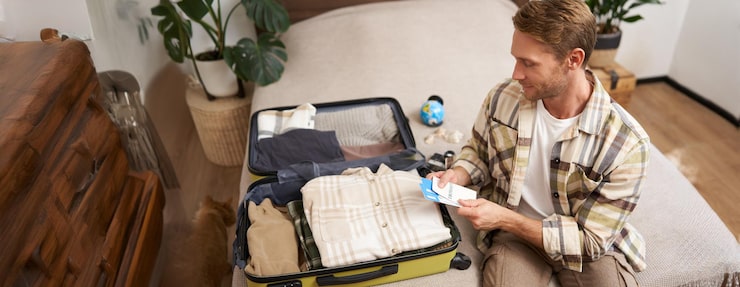
Business travelers often need a personal item that works as a mobile office.
A compact business backpack can hold:
- Laptop
- Tablet
- Charger
- Power adapter
- Mouse
- Notebook
- Pen
- Documents
- Headphones
- Phone accessories
Organization is particularly important because business travelers may need to remove a laptop quickly at security checkpoints or access documents during the journey.
Personal Item for Families
Parents may need more flexibility.
Depending on the airline’s rules, a personal item may contain:
- Baby supplies
- Snacks
- Wipes
- Small toys
- Entertainment devices
- Extra clothing
- Essential medication
Families should also check whether their airline has separate allowances for infant equipment, diaper bags, strollers, or other child-related items.
These policies vary between airlines.
What Not to Put in Your Personal Item
Although a personal item is useful for essentials, it should not become a storage space for prohibited or unnecessary objects.
Before packing, check current airport security rules for:
- Liquids
- Sharp objects
- Aerosols
- Batteries
- Sporting equipment
- Food
- Medical items
Security requirements can vary by country and airport.
A product that is permitted in one situation may have additional restrictions in another.
Liquids and Personal Items
Travelers often use their personal item to carry toiletries.
Common examples include:
- Toothpaste
- Face wash
- Lotion
- Shampoo
- Cosmetics
- Hand sanitizer
Airport security rules can restrict the quantity and container size of liquids carried through screening.
Instead of assuming that every liquid is allowed, check the security requirements applicable to your departure airport.
Travel-size containers can make organization easier.
How to Keep Your Bag Comfortable
A personal item can become surprisingly heavy.
Avoid packing unnecessary objects simply because there is space available.
A comfortable bag should have:
- Padded shoulder straps
- Good weight distribution
- Strong zippers
- Durable fabric
- Comfortable handles
- Appropriate back support
When using a backpack, place heavier items close to your back.
This can make the bag feel more balanced.
Under-Seat Storage Considerations
The purpose of a personal item is generally to fit underneath the seat in front of you.
That space can be affected by:
- Aircraft type
- Seat location
- Emergency-exit restrictions
- Seat configuration
- Entertainment equipment
- Under-seat structure
A bag that fits comfortably on one aircraft may feel tighter on another.
This is another reason to avoid purchasing a bag based solely on advertised dimensions.
Budget Airlines and Personal Items
Budget airlines frequently use baggage policies as part of their fare structure.
A basic fare may include a small personal item while charging additional fees for larger carry-on bags.
This can make a personal item particularly valuable for short trips.
However, policies differ by airline and can change over time.
Before booking, compare:
- Personal-item allowance
- Carry-on allowance
- Checked-bag fees
- Size restrictions
- Weight restrictions
- Fare-specific baggage rules
A cheap ticket can become more expensive if you need multiple baggage upgrades.
How to Travel With Only a Personal Item
Traveling with one small bag is possible for short trips if you pack carefully.
A simple strategy is:
Choose Versatile Clothing
Select clothing that can be combined into multiple outfits.
Limit Shoes
Shoes are bulky, so wear your largest pair during the journey when practical.
Use Travel-Size Toiletries
Small containers can significantly reduce space.
Wear Bulky Layers
If appropriate for the weather, wearing a jacket or sweater can reduce the amount of space required inside your bag.
Use Compression Carefully
Packing cubes can help organize clothing, although they do not eliminate the physical volume of the items.
Leave Unnecessary Items Behind
The easiest way to save space is not to pack something you do not need.
Common Personal-Item Packing Mistakes
Choosing a Bag That Is Too Large
A bag marketed as a personal item may not meet every airline’s requirements.
Ignoring the Wheels and Handles
Measurements can include the entire bag, not just the main compartment.
Packing Too Much
An overstuffed bag can become difficult to fit under the seat.
Forgetting Important Documents
Keep travel documents accessible rather than buried under clothing.
Putting Valuables in Checked Bags
Important and valuable items are generally better kept with you.
Not Checking the Fare Rules
The same airline can have different baggage allowances depending on the ticket purchased.
How to Choose the Best Personal Item
Before buying a travel bag, consider these factors:
- Airline compatibility
- Dimensions
- Weight
- Capacity
- Laptop protection
- Number of compartments
- Material durability
- Comfort
- Security features
- Ease of access
If you regularly fly different airlines, choosing a more compact bag can provide greater flexibility.
Key Points to Remember
- A personal item is generally designed to fit underneath the seat.
- Airlines determine their own size and baggage rules.
- A backpack, purse, tote, laptop bag, or small duffel can serve as a personal item.
- Always check the airline’s published dimensions before flying.
- Wheels, handles, and external pockets can affect the total size.
- Keep passports, identification, medication, valuables, and important electronics accessible.
- Avoid overpacking the bag.
- Use compartments or packing pouches to organize small items.
- Check liquid and security requirements before arriving at the airport.
- Budget fares may have more restrictive baggage allowances.
- A personal item can be especially useful for short trips and travelers trying to minimize baggage fees.
Final Thoughts
A well-chosen personal item can make flying more convenient, affordable, and organized. Instead of treating the bag as a smaller suitcase, think of it as your essential travel kit. It should contain the documents, electronics, medication, valuables, comfort items, and other belongings you may need during the journey.
Because baggage rules differ between airlines and ticket types, there is no single bag size that works universally. Checking the airline’s current requirements before departure is one of the easiest ways to avoid unexpected fees or having to move belongings at the airport.
For frequent travelers, a lightweight, durable, well-organized bag that comfortably fits beneath the seat can become one of the most useful pieces of travel equipment.
FAQs
1. What is considered a personal item on a plane?
A personal item is generally a smaller bag that fits underneath the seat in front of you. Common examples include a small backpack, purse, laptop bag, tote, or briefcase.
2. Is a backpack considered a personal item?
Yes, a backpack can generally qualify as a personal item if it meets the airline’s size requirements and fits underneath the seat.
3. Can I bring a personal item and a carry-on bag?
Many airlines allow both, but the allowance depends on the airline, route, and ticket type. Some basic fares may include only a personal item.
4. What should I keep in my personal item?
Keep important travel documents, identification, medication, valuables, electronics, chargers, and other items you may need during the flight or if your checked baggage is delayed.
5. How do I know if my bag is small enough to be a personal item?
Check your airline’s current baggage policy and compare the maximum permitted dimensions with the complete dimensions of your bag, including wheels, handles, and external pockets.